Products
Knowledge Base
Support Downloads
Articles
suggested searches


You're just [0] away from FREE shipping!
Your cart
You're just [0] away from FREE shipping!
Your cart
Unmatched capacity optimized for scale & TCO
The future of sustainable mass-capacity storage is now

For cloud service providers (CSPs) managing Exabytes of data, optimizing areal density is critical to meeting escalating data demands and managing operational costs. Increased areal density enables greater data storage per drive, which reduces physical space requirements, lowers power consumption, and results in a reduced total cost of ownership (TCO).
Seagate has established industry leadership in areal density innovation, offering hard drives exceeding 30TB and leveraging extensive engineering and manufacturing expertise to support cloud providers in scaling their infrastructure efficiently and sustainably to meet ongoing demand.
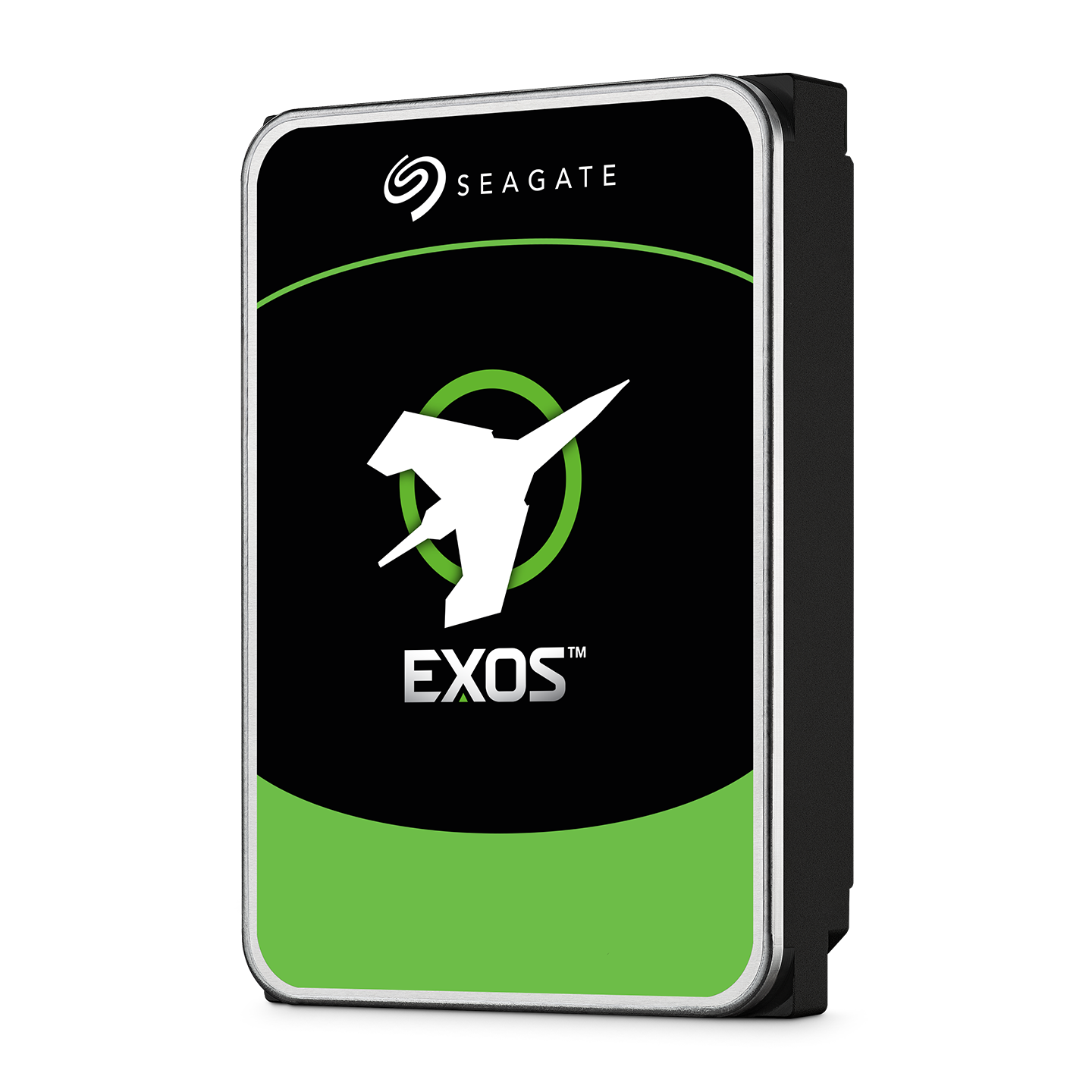
Hard Drives are optimal for large-scale workload demonstrating superior endurance, lower TCO, higher energy efficiency, and minimal carbon footprint
AI thrives on data—more data leads to more accurate, insightful models, and hard drives are at the heart of this process. AI systems need to learn and evolve. In today’s world, people and machines are generating data at unprecedented rates, and hard drives play a crucial role in storing not just raw data, but also the valuable content and checkpoints created by AI models to meet compliance requirements and support trustworthy AI. Put simply, scalable mass capacity hard drive storage isn’t just a backbone for AI—it’s the key to unlocking its full potential and ensuring sustainable success across diverse industries and markets.


When developing large-scale data infrastructure, it is essential to recognize that not all storage media offer the same advantages. For applications requiring continuous data writing and processing—such as AI pipelines, video surveillance archives, or cloud-scale backups—hard drives provide superior efficiency in terms of total cost of ownership (TCO), power consumption, and durability.
Hyperscale data centers operate a wide range of data management workloads, and it is clear that no single storage medium meets all key criteria. An optimal architecture utilizes a combination of hard drives and SSDs to achieve the best results. Consider a workload simulation at the 100+PB scale: hard drives like Seagate’s Exos 32TB clearly outperform SSDs in both cost-effectiveness and energy efficiency for write-intensive tasks delivering the same performance and throughput.
SSDs excel when it comes to read-heavy, smaller deployments, but in write-focused scenarios, their costs and power consumption soar. This happens because SSDs require extensive over-provisioning to address endurance limitations throughout their lifecycle. When factoring in the additional provisioning needed to meet drive write endurance specifications, the benefits may become even clearer: for high-volume, write-intensive environments, hard drives scale effectively, offering an economical and sustainable solution. While a storage cluster exceeding 100PB would primarily use hard drives, a proportion of SSDs (generally 5–10%) is included to support optimal system performance.

When scale demands performance: How a global cloud service provider achieves both needs with hard drives
Real-world workload analysis can reshape assumptions and architectures.
Data storage is the oxygen of machine learning and AI
Much like oxygen fuels the human mind, data storage fuels AI development. The ability to store, access, and process data efficiently determines how effectively AI models are trained and refined.
Three truths about hard drives and SSDs
An examination of the claim that flash will replace hard drives in the data center.

Checkpointing in AI
Hard drives support AI reliability by preserving transparent, traceable training milestones.

NVMe hard drives and the future of AI storage
Learn how Seagate is advancing NVMe technology for high-capacity hard drives, optimizing AI data pipelines with improved performance, scalability, and reduced bottlenecks.